The back story
Processions, paths and marble: walking Athens, the back story
From the Kerameikos gates to Pikionis’ paths: the story behind the city’s archaeological walks.

Photo Credit
Image courtesy of © George E. Koronaios · CC BY-SA 4.0 via Wikimedia CommonsAthens was built for walking long before cars: its festivals set off on foot from the Kerameikos gates, its stadium was clad in marble three times, and a modernist architect laid stone paths across the Acropolis slopes in the 1950s. Here is the story behind the city’s classic walks, from the Sacred Way to Anafiotika and Lycabettus.
Roads that began at a gate
Athens was a city of walkers long before it had pavements. At the Kerameikos, entered today from 148 Ermou Street, two gates in the Themistoclean Wall, built in haste in 478 BC after the Persian retreat, sent the great processions on their way: from the Sacred Gate the Eleusinian Mysteries set off along the Sacred Way to Eleusis; from the Dipylon, the largest and most formal gate, the Panathenaic procession climbed towards the Acropolis.
The Ministry of Culture describes the Pompeion, the building behind the wall where those processions were prepared, and the roads beyond lined with family tombs and carved reliefs, among them the Stele of Hegeso of about 400 BC. Few cemeteries have been so busy: every festival in the city began here, among the dead.
The walk from Thissio to the Kerameikos and Gazi follows Ermou west to that gate, then carries on to the brick chimneys of Technopolis. It is a lesson in Athenian time: half an hour on foot, two and a half thousand years on the clock.
A modernist on the slopes
The Acropolis promenade owes its grace to one architect. In the 1950s Dimitris Pikionis laid out the network of stone paths that runs from the foot of the Propylaia across to the Philopappou monument, and renovated the little church of Agios Dimitrios Loumbardiaris on the way. In 2003 the paths won the International Carlo Scarpa Prize for Gardens, awarded unanimously.
Walk them slowly. The stones are set like a mosaic for feet, and the slope is never quite where you expect it to be, which may be the point: Pikionis made a path that refuses to let you hurry past the Parthenon. Go at the end of the day, when the marble turns gold and the city below starts switching on its lights.
The stadium of white marble
East of the National Garden, the walk from Syntagma ends at the Panathenaic Stadium. Construction began in 330/329 BC; Herodes Atticus rebuilt it in marble in 140–143 AD for the Great Panathenaia; and it was re-marbled for the first modern Olympic Games in 1896. Stand on the track and the scale lands: a horseshoe of white Attic marble built for a crowd, with the pines of Ardittos Hill rising behind it like a backdrop.
Half an hour on foot, two and a half thousand years on the clock.
An island in the city
In Plaka the route climbs from the Choragic Monument of Lysicrates to Anafiotika, a knot of whitewashed houses built in the 19th century by builders from Anafi, a small island in the Cyclades, who shaped their Athenian homes after those they had left behind. It feels like a Cycladic village that missed its ferry. These are homes still: keep your voice down.
Hills for the evening
The city’s high walks are its balconies. From Kolonaki a zigzag path through the pines climbs Lycabettus to the white chapel of Agios Georgios in 30 to 40 minutes. On the coast the Riviera walk ends at the Stavros Niarchos Foundation Cultural Center, designed by Renzo Piano, with a 400-metre canal and the Lighthouse on the roof of the Greek National Opera.
What links these routes? Most of them were never designed as walks at all. They are old processions, builders’ lanes and a modernist’s paths, each made for a purpose and then left to the walker. That is why they work: the city’s best views were laid out by people going somewhere, and Athens still rewards anyone willing to follow them on foot rather than by taxi.
Our advice: walk early, as the archaeological sites open at 08:00 and summer middays are fierce. Kerameikos tickets are €10 (reduced €5) and include its museum; check opening hours on the Ministry of Culture’s Odysseus site before you go, since winter hours are shorter. Wear proper shoes: Pikionis’ stones are beautiful and unforgiving.
Why it's on our list
- Roads that began at a gate
- A modernist on the slopes
- The stadium of white marble
- An island in the city
Location
The map comes from Google Maps, which sets its own cookies once it loads.
More in depth
 The back storyGold, spice and a flea market: how Athens shops, the back storyFrom the Monastiraki flea market to Ermou and Lalaounis: the history of Athens’ shopping streets.
 The back storySandals for the stars: Melissinos, the poet sandal maker of AthensA poet at the bench and Beatles at the door: the Athens workshop that shod the stars.
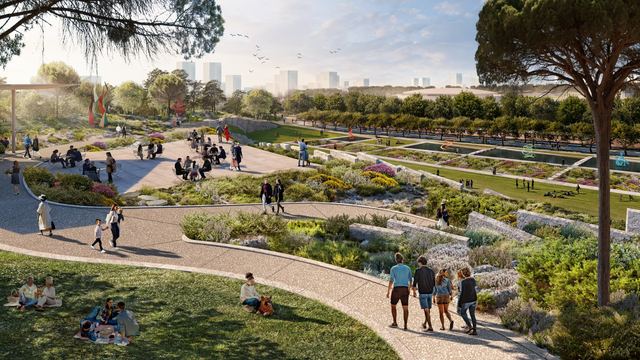 One of Europe’s largest regenerationsThe Ellinikon: a new city on the old airportA new coastal district on the old airport site, with a vast park and the Riviera Tower.