Objects of Desire
Five see-through cars and a spiral of wheels: the Hellenic Motor Museum
A collector’s 110-plus cars near Victoria, five see-through ones, and the showrooms up north.
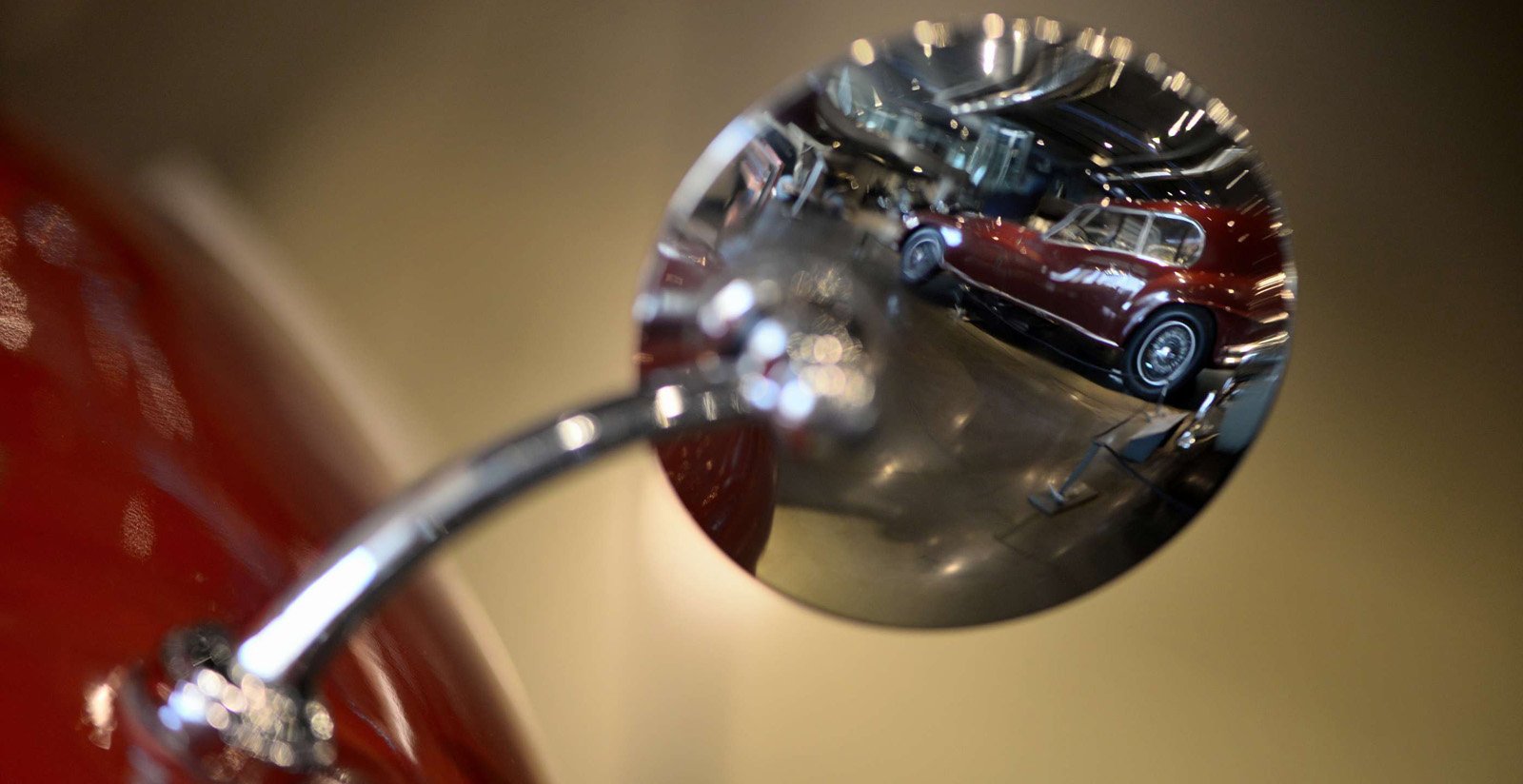
Photo Credit
Image courtesy of © the Hellenic Motor MuseumWhy would a city of marble keep its finest collection of chrome a few streets from Victoria metro station? Because one collector decided Athens deserved a motor museum in the centre, not out by the ring road. Here is how the Hellenic Motor Museum came together, what to look for inside, and where the city’s new cars wait, checked against official pages in November 2026.
A collector’s childhood list
Theodore Charagionis began as a competitor, and in 1977, when his first child was born, he decided his first cycle of racing was complete and turned to collecting old cars. The rule, he writes on the museum’s site, was simple: buy the cars of his childhood dreams, the ones that had left him speechless, some of them seen only in pictures.
So the first arrivals were a Maserati Mistral, a Rolls-Royce Wraith, two Jaguar E-types, two Lancia Appia Zagatos, two Austin-Healey 3000s and three Dinos, one of them a Ferrari. By the early 1990s there were 25 cars and a fear, in his words, of becoming a slave to the collection rather than enjoying it. The cure, naturally, was an offer to buy another collection of 20.
Finding a home took longer than finding the cars. A plan for small plots between Adrianou and Pandrosou in Plaka stalled in licensing, so the search moved to the blocks between the National Archaeological Museum and Victoria metro station. Gathering the land began in 1999 and took a decade. Athens, it turns out, will sell you a Ferrari faster than a building plot.
Cars you can see through
Today the museum fills more than 3,000 square metres, at the corner of Ioulianou and 3is Septemvriou, with more than 110 cars from the 19th and 20th centuries. Before you even reach the galleries, 72 wheels line the spiral ramp from the ground floor to the fourth: a short history of motoring that the founder made sure anyone could see without buying a ticket.
The cleverest room is Transparency, opened in 2016: five see-through cars and four teaching models from the 1950s, 1960s and 1970s, cut open to show how engines and transmissions work. Among them are a 1964 Lancia Flavia Convertibile, a 1968 Porsche 912 and a 1974 Lotus Europa Twin Cam Special, all wearing their insides on the outside.
Made by Hellas, on the top floor, gathers cars and motorcycles built, assembled or designed in Greece, and cars made abroad with Greek engineers, entrepreneurs or investors behind them. Only half the exhibits belong to the museum; the rest come from other museums, universities and private collectors, which makes the floor less a showroom than a family reunion.
Athens, it turns out, will sell you a Ferrari faster than a building plot.
The museum was planned as a piece of city-making as much as a collection. Charagionis noticed that most car museums lose money, the big German manufacturers’ own museums excepted, and that few stand in city centres because the land costs too much. His answer has a total built area of 30,000 square metres, half of it parking and support spaces.
Alongside the exhibition halls sit an auditorium and a room where children learn about road safety and young drivers about racing. In central Athens, where a parking space is rarer than a Dino, the car park may be the most exotic exhibit of all.
Where the new ones wait
If the museum leaves you wanting something with a warranty, the official showrooms are in the northern suburbs: Porsche Center Athens at Metamorfosi, on the Athens–Lamia National Road, and Trident Cars, the Lamborghini and Maserati dealer, in Kifisia. Both are working sales floors rather than galleries, so ring ahead for a viewing or a test drive, and dress as you would for a good lunch.
Our advice: the museum opens 10:00–17:00 on weekdays and 11:00–18:00 at weekends, with last admission 30 minutes before closing, and shuts on a handful of holidays, including Easter Sunday and 15 August. Pair it with the National Archaeological Museum a few minutes away, where the engineering is of a considerably older vintage.
Why it's on our list
- A collector’s childhood list
- Cars you can see through
- Where the new ones wait
Location
The map comes from Google Maps, which sets its own cookies once it loads.
More in depth
 Objects of DesireAcoustics first, walls second: how Athens learned to listenMegaron’s hall designed around its sound, a jazz room in Mets and a museum sorted by vibration.
 Objects of DesireGears from the sea: the Antikythera Mechanism and its working twinsA shipwreck’s bronze gearwork, its working replicas off Akadimias and a dome full of stars.
 Objects of DesireA hotel reborn, a tower that waited: the new architecture of AthensThe 1963 Hilton reborn as The Ilisian, Piraeus Tower, Renzo Piano’s hill and a museum garden.